
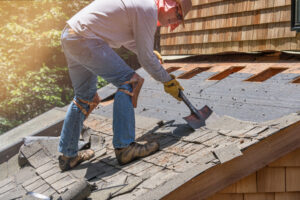
Tearing off old roofing is one of the most physically demanding and dangerous parts of a roofer’s job. Unfortunately, many injuries occur when the underlying roof decking is rotten and gives way beneath a worker’s feet. If this happened to you, you may be entitled to workers’ compensation benefits—but securing them isn’t always simple. Here’s what you need to know.
Why Rotten Decking Poses a Serious Risk
Roof decking—typically plywood or oriented strand board (OSB)—is designed to support the weight of roofers and materials. Over time, moisture damage from leaks or age can cause it to rot and weaken, often without any visible signs from the surface.
Common Hazards When Decking Fails
- Sudden falls through the roof structure
- Broken bones, sprains, or spinal injuries
- Head trauma from falling or hitting structural supports
- Tool-related injuries during the fall
- Long-term disabilities requiring rehabilitation
These incidents are not just dangerous—they can be life-altering. And even though roofing is a high-risk occupation, that doesn’t mean workers must simply accept the consequences without compensation.
Are Roofers Covered Under Workers’ Comp in California?
Yes. California law requires employers to provide workers’ compensation coverage for employees, including those in the construction and roofing industries. This coverage applies regardless of who was at fault for the accident.
If rotten decking gave way and caused your injury, you may be eligible for:
- Medical expenses (hospital visits, surgery, physical therapy)
- Temporary disability payments (if you cannot return to work immediately)
- Permanent disability payments (if the injury causes long-term damage)
- Job retraining benefits (if you cannot return to roofing)
- Death benefits (for surviving family members, in the worst-case scenario)
Proving Your Case: What to Do After a Decking Fall
Getting your workers’ comp claim approved means documenting the event and demonstrating that the injury occurred in the course of your job. Here’s how to protect yourself legally:
1. Report the Injury Immediately
Let your supervisor or job foreman know what happened. Make sure the incident is recorded in writing and ask for a copy of the report.
2. Get Medical Attention Right Away
Even if you think you can “walk it off,” don’t. Getting prompt medical treatment establishes a record of your injury and connects it to the job.
3. Tell Your Doctor the Injury Happened at Work
This helps your doctor complete the correct paperwork and ensures the medical care you receive is billed to workers’ comp—not your private insurance.
4. Document the Scene If Possible
Take photos of the rotten decking, safety conditions, or lack of warning signs. If coworkers witnessed the accident, get their statements if they’re willing to provide them.
5. File a DWC-1 Claim Form
In California, your employer should give you this form. Completing and submitting it is an official request for workers’ comp benefits.
When Your Claim Is Delayed or Denied
Unfortunately, injured workers sometimes face uphill battles with insurance companies or uncooperative employers. Claims may be denied for reasons such as:
- The insurer alleges pre-existing conditions
- There’s a delay in reporting the injury
- They claim you weren’t on the clock at the time
- There is insufficient medical documentation
Don’t give up. At PLBH, we help injured roofers fight for the benefits they deserve. If your claim has been denied or you’re not receiving full benefits, legal representation can make the difference.
Get Help From an Employment Law Attorney
You’ve already taken a fall. You shouldn’t have to fall through the cracks of the workers’ comp system, too. If you were hurt during a roofing tear-off due to rotten decking, contact PLBH at (800) 435-7542 today. We’ll help you understand your rights, gather the necessary evidence, and pursue the benefits you’re entitled to—so you can focus on healing.