
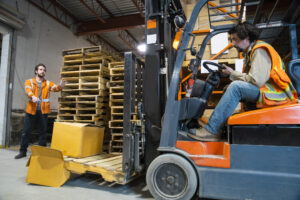
Forklifts are essential in large fulfillment centers, but they also pose serious risks when operating in fast-paced environments. Workers on foot, drivers, and support staff can all be injured during a collision, even when following proper safety procedures. If you were hurt in a forklift accident, workers’ compensation may provide medical treatment, disability payments, and other benefits. PLBH can help ensure your claim is properly supported from the start.
How Forklift Collisions Occur in Fulfillment Centers
These facilities often operate around the clock, with employees under pressure to meet high productivity targets. This fast pace increases the likelihood of accidents involving heavy machinery.
Common causes of forklift collisions include:
- Operators rushing to meet quota expectations
- Turns taken too sharply in congested aisles
- Poor visibility around stacked materials
- Mechanical malfunctions or worn brakes
- Fatigue during long or overnight shifts
- Miscommunication between drivers and spotters
Even low-speed collisions can cause significant injuries due to the weight and force of the machinery involved.
Types of Injuries Common in Forklift Accidents
Whether you were driving the forklift or working nearby, collisions can lead to:
- Back, neck, or spinal injuries
- Fractures in the legs, arms, or feet
- Crush injuries from being pinned against a surface
- Head injuries, even with a hard hat
- Knee, shoulder, or hip trauma from sudden impact
- Soft-tissue injuries that worsen over time
Some injuries require surgery or long-term physical therapy. Workers’ compensation can cover these medical costs and provide income support during recovery.
Steps to Take Immediately After a Forklift Collision
Acting quickly after an accident can strengthen your workers’ comp claim and protect your health.
- Report the Accident
Notify your supervisor immediately. Document where and how the collision occurred, including the names of any witnesses. - Seek Medical Attention
Even if the injury seems minor, get medical care. Some conditions, such as internal injuries or whiplash, may not show symptoms right away. - Preserve Evidence
Helpful documentation may include:
- Photos of the scene, equipment, and visible injuries
- Notes about lighting, floor conditions, and visibility
- Maintenance records (if available) showing equipment issues
- Statements from coworkers who saw or heard the collision
- File a Workers’ Compensation Claim
You may qualify for wage replacement, medical treatment, and other benefits. PLBH can assist with filing the claim correctly and gathering essential supporting evidence.
Challenges Workers Often Face in Forklift Collision Claims
Insurance companies sometimes dispute these claims, especially when there are no video recordings or when the cause of the collision is unclear. They may argue that:
- The worker wasn’t following safety rules
- The injury didn’t occur at work
- A preexisting condition caused the symptoms
- There is insufficient evidence linking the accident to the injury
These disputes are common and do not mean the claim is invalid. With proper documentation and legal support, many workers successfully obtain benefits.
How PLBH Helps Injured Workers After Forklift Accidents
Forklift-related injuries can be severe, and navigating the workers’ compensation system alone can feel overwhelming. PLBH supports injured workers by:
- Collecting medical and workplace evidence
- Demonstrating how the collision caused the injury
- Challenging unfair delays or denials
- Ensuring access to appropriate medical care and benefits
If you’ve been injured in a forklift collision, you deserve strong support during your recovery.
Call (800) 435-7542 to speak with PLBH and learn how to move forward with your workers’ compensation claim.