
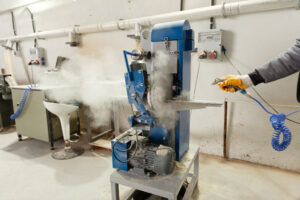
Warehouse environments often expose workers to airborne dust, fibers, and particulate matter that can significantly affect respiratory health over time. When repeated dust exposure leads to occupational asthma, the condition can interfere with breathing, stamina, and the ability to safely perform job duties. Workers’ compensation benefits may be available, but these claims often require detailed medical and workplace evidence to prove causation.
How Dust Exposure Occurs in Warehouse Settings
Dust exposure in warehouses is rarely the result of a single incident. Instead, it develops through ongoing contact with airborne irritants created by daily operations.
Common sources of exposure include:
- Cardboard breakdown and packaging debris
- Forklift traffic stirring settled dust
- Palletized goods shedding fibers or residue
- Poor ventilation or outdated air filtration
- Handling bulk materials such as grain, cement, or powders
Over time, inhaling these particles can inflame the airways and trigger chronic respiratory conditions.
Understanding Occupational Asthma
Occupational asthma is a condition in which workplace exposure causes or significantly worsens asthma symptoms. Unlike childhood or allergy-related asthma, occupational asthma often develops in adults with no prior history of respiratory disease.
Symptoms may include:
- Shortness of breath during or after work
- Wheezing or chest tightness
- Persistent coughing
- Increased sensitivity to dust or fumes
- Symptoms that improve away from work but return upon exposure
Recognizing this pattern is key to linking the condition to the workplace.
The Importance of Medical Diagnosis and Documentation
A formal medical diagnosis is essential when pursuing a workers’ compensation claim for occupational asthma. Respiratory conditions are often questioned by insurers due to their potential overlap with non-work-related causes.
Medical documentation may include:
- Pulmonary function testing
- Physician evaluations connecting symptoms to workplace exposure
- Treatment records showing response to environmental changes
- Notes documenting symptom improvement during time away from work
Clear medical opinions linking asthma to job-related dust exposure are critical.
Reporting the Condition as a Work-Related Injury
Because occupational asthma develops gradually, workers may not immediately realize their condition is work-related. Once a connection becomes apparent, reporting should not be delayed.
Reporting helps establish:
- The timeframe of exposure
- The progression of symptoms
- Access to authorized medical treatment
- Protection against claim denial due to late notice
Even if symptoms have been present for months, timely reporting after recognition remains important.
Common Challenges in Occupational Asthma Claims
Insurance carriers often argue that asthma is caused by allergies, smoking history, or environmental factors outside of work. They may also claim the condition preexisted employment.
Evidence used to counter these arguments may include:
- Employment records showing dust-heavy assignments
- Industrial hygiene reports or safety complaints
- Witness statements confirming workplace conditions
- Medical opinions ruling out alternative causes
Consistency across medical and employment records strengthens the claim.
Workers’ Compensation Benefits That May Be Available
When occupational asthma is accepted as work-related, workers’ compensation benefits may include:
- Coverage for respiratory treatment and medication
- Temporary disability benefits if work must be modified or stopped
- Permanent disability benefits in severe or chronic cases
- Job retraining if exposure cannot be safely avoided
Early intervention may help prevent long-term lung damage.
Why Legal Support Can Make a Difference
Occupational disease claims are often more complex than injury claims involving a single accident. Legal guidance can help ensure medical evidence clearly addresses causation and workplace exposure.
PLBH assists injured workers by developing strong, evidence-based workers’ compensation claims. If dust exposure at work has led to breathing problems or asthma, contact PLBH at (800) 435-7542 to discuss your options.