
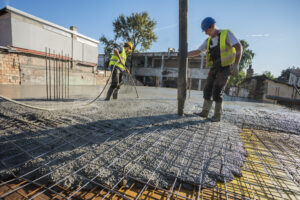
Concrete finishing requires long hours of direct contact with wet cement, often during extended slab pours that stretch across an entire shift. While the skin damage caused by wet cement may seem like a minor irritation at first, prolonged or repeated exposure can lead to serious chemical burns and chronic dermatitis.
Wet cement is highly caustic, and workers who kneel, wade, or otherwise stay in contact with it for hours at a time face a real risk of lasting skin injury. If you’ve developed cement burns or ongoing skin problems from concrete finishing work, understanding your workers’ compensation rights can help protect both your health and your livelihood.
How Wet Cement Damages the Skin
Wet cement has a high pH level that makes it corrosive to skin on contact, and the damage often builds gradually rather than appearing all at once. Common effects of prolonged exposure include:
- Chemical burns ranging from mild irritation to deep tissue damage
- Cracked, blistered, or ulcerated skin, particularly on the knees, hands, and lower legs
- Chronic dermatitis that flares with repeated exposure
- Thickened, discolored, or scarred skin from long-term contact
- Increased sensitivity or allergic reaction to cement components over time
Because the burning sensation may not be immediately intense, many workers don’t realize the extent of the damage until skin breakdown has already begun, often well into a pour.
Why These Injuries Are Often Underreported
Cement burns and dermatitis frequently develop over multiple shifts rather than from a single dramatic incident, which can make workers hesitant to report them or assume they don’t qualify for a claim. This gradual pattern can also make it harder to pinpoint an exact date of injury. A few points to keep in mind:
- California law recognizes cumulative trauma injuries, not just single-incident injuries
- Skin damage from repeated cement exposure can qualify as an occupational illness
- Delayed reporting doesn’t automatically disqualify a valid claim, but earlier reporting strengthens it
Documentation That Supports a Strong Claim
Because these injuries build over time, thorough documentation is especially important. Helpful evidence includes:
- Medical evaluation and photographs documenting the skin condition
- A record of hours spent in direct contact with wet cement per shift
- History of protective equipment provided, such as gloves, boots, or knee protection
- Dermatology records tracking the progression or recurrence of symptoms
- Statements from coworkers who can confirm working conditions
Benefits Available Through a Successful Claim
A workers’ compensation claim for cement-related skin injuries can help cover:
- Dermatological treatment and prescription medications
- Wound care for burns or ulcerations
- Temporary disability benefits during healing
- Permanent disability benefits for lasting scarring or chronic sensitivity
- Job modifications or retraining if continued cement exposure isn’t medically advisable
Steps to Take If You’re Experiencing Symptoms
If you’re a concrete finisher noticing skin damage from wet slab work, a few steps can help protect your health and your claim:
- Report symptoms to your employer as soon as they appear
- Seek dermatological evaluation, and mention your occupation and exposure pattern
- Take photos of affected skin as symptoms develop or worsen
- Keep track of protective gear provided, or note when it wasn’t available
Get the Support You Need
Cement burns and chronic dermatitis can affect far more than your work life, impacting comfort and mobility long after a shift ends. An experienced advocate can help document the connection between your working conditions and your skin condition, and pursue the full benefits available under California law. If you’re a concrete finisher in El Monte dealing with cement-related skin damage, contact PLBH at (800) 435-7542 to discuss your case.