
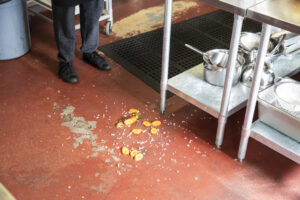
Slippery floors are a daily hazard in restaurant kitchens, especially when grease and food debris are part of the fast-paced environment. If you’ve suffered a fall while working in a kitchen, you may be eligible for workers’ compensation to cover your medical care, lost income, and recovery time.
Here’s what you need to know about your rights and how to navigate a workers’ comp claim for a grease-related slip and fall injury.
Why Grease Hazards Are So Common in Kitchens
Even when safety procedures are in place, restaurant kitchens are prone to slippery surfaces due to:
- Fryer oil spills
- Grease tracked from cook lines to dish areas
- Food debris or liquids dropped during prep and service
- Inadequate non-slip mats or floor drains
- Delayed cleanup due to high rush times
When these conditions aren’t addressed promptly, they create dangerous slip zones that can lead to head trauma, back injuries, fractures, and more.
Common Injuries From Grease-Related Falls
A grease-related slip may seem minor at first, but many injuries worsen over time. Some of the most common injuries seen in restaurant kitchen accidents include:
- Concussions or traumatic brain injuries from hitting your head on counters or floors
- Fractured wrists, hips, or ankles from instinctive bracing during a fall
- Herniated discs or spinal injuries from twisting or landing hard
- Knee and shoulder injuries, especially when slipping causes awkward landings
All of these injuries can interfere with your ability to work and may require long-term treatment or even surgery.
Steps to Take Immediately After a Slip and Fall
If you’ve slipped in a restaurant kitchen, what you do next can make or break your workers’ comp claim.
1. Report the Injury Immediately
- Notify your manager or supervisor as soon as the fall occurs.
- Ensure the incident is documented in writing with the date, time, and location of the fall.
2. Seek Medical Attention
- Even if the injury seems mild, request a medical evaluation.
- Let the doctor know the injury happened at work and describe the fall in detail.
3. Document the Scene
- If possible, take photos of the greasy floor, footwear, or any obstacles in the area.
- Get witness statements from coworkers who saw the fall or the floor conditions.
4. File a Workers’ Comp Claim
- Request and submit a DWC-1 claim form from your employer.
- Keep a copy for your records and follow up on the progress.
What Benefits Can You Receive?
Workers’ compensation is designed to support you through your recovery. If your claim is approved, you may be eligible for:
- Medical expenses including doctor visits, physical therapy, and surgery
- Temporary disability payments if you’re unable to work during recovery
- Permanent disability benefits for long-lasting or permanent impairment
- Supplemental job displacement benefits if your injury prevents you from returning to the same job
When Claims Are Denied or Delayed
Unfortunately, many valid claims are denied—especially if there is no clear documentation or the employer argues that the injury wasn’t work-related. You may need to fight back with:
- Medical records linking the injury to the fall
- Evidence that unsafe conditions (like grease buildup) were present
- Legal representation from PLBH to ensure your rights are protected
Don’t Navigate This Alone
Restaurant workers face unique hazards every shift, and greasy floors are more than just an annoyance—they’re a serious safety risk. If you’ve been injured in a kitchen slip and fall, you have the right to compensation.
At PLBH, we’re committed to helping injured workers get the support they need. Call (800) 435-7542 today for a free consultation and learn how we can help you move forward with your claim.