
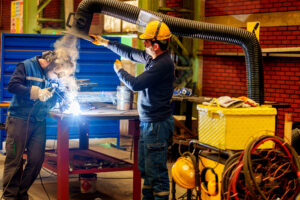
Construction sites often involve multiple trades working simultaneously in close quarters. Welders perform essential tasks such as joining steel beams, repairing equipment, and fabricating metal structures. While welders themselves typically wear protective eye shields, nearby workers may be exposed to intense flashes of ultraviolet light from welding arcs.
Repeated exposure to welding flash—sometimes called “arc flash” or “welder’s flash”—can cause serious eye injuries. For construction workers who experience vision damage after prolonged exposure, workers’ compensation benefits may provide medical coverage and financial support. However, establishing that vision loss is work-related may require detailed medical documentation and evidence of repeated exposure.
Understanding the Danger of Welding Flash
Welding arcs produce extremely bright light along with ultraviolet (UV) radiation. Direct exposure to this radiation can injure the surface of the eye, a condition known as photokeratitis. In severe cases, repeated exposure can also damage deeper eye structures and affect long-term vision.
Construction workers who are not performing the welding themselves may still be exposed when:
- Welding occurs nearby without protective barriers
- Workers pass through active welding areas
- Multiple trades work in the same confined space
- Temporary shields or curtains are not installed
- Workers are unaware that welding is occurring behind them
Even brief exposure to welding arcs can cause painful eye injuries.
When exposure occurs repeatedly over time, the damage may accumulate and lead to more serious vision problems.
Symptoms of Welding Flash Eye Injuries
Workers exposed to welding flash often experience symptoms several hours after the exposure occurs. The delay can make it difficult to immediately connect the symptoms to the workplace.
Common symptoms include:
- Severe eye pain or burning sensations
- Blurred vision
- Sensitivity to light
- Redness and swelling of the eyes
- A gritty or “sand in the eye” feeling
In many cases, the pain can be intense enough to require medical attention. Repeated exposure over months or years may contribute to longer-term visual problems, including chronic irritation or reduced vision clarity.
When symptoms occur after working near welding activity, medical evaluation is important.
Medical Documentation Needed to Support a Vision Injury Claim
Establishing a workers’ compensation claim for welding flash exposure often requires medical evidence linking the eye injury to workplace conditions.
Eye specialists may perform several evaluations, including:
- Eye examinations using slit-lamp equipment
- Vision testing to measure visual acuity
- Evaluation of corneal damage or inflammation
- Documentation of repeated exposure history
Ophthalmologists or optometrists may also review the worker’s job duties and the frequency of exposure to welding arcs. If medical providers determine that workplace exposure contributed to the injury, their findings can support a workers’ compensation claim.
Medical records documenting symptoms shortly after exposure can also help demonstrate the connection between the injury and job duties.
Evidence That Can Help Establish Workplace Exposure
Because construction sites involve many moving parts, documenting the work environment may play an important role in these claims.
Evidence that may support a claim includes:
- Jobsite records showing welding activity near the worker
- Witness statements from coworkers or supervisors
- Safety reports documenting inadequate shielding
- Photographs of the work area or welding setup
- Medical records describing the timing of symptoms
These records can help show that the worker was regularly exposed to welding flash during the course of employment.
Consistent documentation can make it easier to demonstrate that the vision injury was work-related.
Challenges Workers May Face When Filing Claims
Insurance carriers sometimes question whether eye injuries are truly related to welding exposure. In some cases, they may argue that the symptoms resulted from other factors such as allergies, infections, or unrelated eye conditions.
Insurers may also dispute whether the exposure occurred at work or whether the injury is serious enough to warrant ongoing treatment.
Because of these challenges, thorough medical documentation and evidence of workplace exposure can be critical.
Workers who delay seeking treatment or fail to report symptoms promptly may face additional difficulties during the claims process.
Seeking Help After a Workplace Vision Injury
Vision problems can significantly affect both a worker’s career and daily life. Construction employees who experience eye injuries caused by welding flash exposure may be entitled to workers’ compensation benefits that help cover medical treatment and lost income during recovery.
PLBH helps injured workers evaluate workplace injury claims and address disputes involving occupational hazards. Our team works with employees to review the circumstances surrounding their injuries and help protect their right to benefits.
If you experienced vision problems after repeated exposure to welding flash on a construction site, contact PLBH at (800) 435-7542 to discuss your situation and learn what options may be available to support your recovery.