
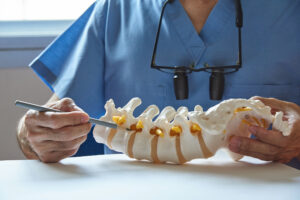
Spinal fusion surgery is often recommended for people suffering from severe back injuries, degenerative disc disease, or spinal instability. The procedure is intended to stabilize the spine and reduce pain by permanently joining two or more vertebrae together. For some patients, the surgery successfully improves mobility and allows them to return to work.
However, spinal fusion does not always produce the desired outcome. In some cases, individuals continue to experience severe pain, limited mobility, and nerve complications even after surgery. When these limitations prevent a person from performing regular work activities, Social Security Disability Insurance (SSDI) benefits may provide financial support.
Successfully qualifying for SSDI after a failed spinal fusion often depends on demonstrating that the condition continues to cause significant functional limitations.
Why Spinal Fusion Surgery Sometimes Fails
Spinal fusion is a complex surgical procedure, and several factors can affect the outcome. Some patients continue to experience symptoms because the spine does not heal as expected or because nerve damage remains after surgery.
Common reasons spinal fusion may fail to restore mobility include:
- Persistent nerve compression in the spine
- Failed fusion where the bones do not properly join
- Hardware complications involving rods or screws
- Scar tissue affecting surrounding nerves
- Adjacent segment disease affecting nearby vertebrae
Even when imaging shows that the fusion itself was technically successful, patients may still experience severe pain and limited movement.
For individuals whose jobs require standing, lifting, or sitting for extended periods, these limitations may make returning to work impossible.
Functional Limitations That Can Affect Employment
A key part of any SSDI claim involves demonstrating how a medical condition interferes with the ability to work. After spinal fusion surgery, some individuals continue to experience significant physical restrictions.
Common work-related limitations may include:
- Inability to stand or walk for extended periods
- Difficulty sitting for long periods without severe pain
- Restricted bending, lifting, or twisting
- Nerve pain radiating into the legs
- Reduced balance or mobility
Even sedentary jobs may become difficult if the individual cannot sit comfortably for sustained periods or requires frequent position changes.
These limitations can make maintaining full-time employment extremely challenging.
Medical Evidence Required for an SSDI Claim
Social Security evaluates disability claims using detailed medical records that describe both the underlying condition and its functional impact. For individuals who have undergone spinal fusion surgery, this documentation often includes both pre- and post-surgical medical history.
Important evidence may include:
- Surgical records describing the spinal fusion procedure
- Imaging studies such as MRIs or CT scans
- Treatment records documenting persistent symptoms
- Physical therapy reports showing mobility limitations
- Physician statements describing work restrictions
Doctors may also document how pain and limited mobility affect everyday activities such as walking, standing, and sitting.
These functional limitations are critical when Social Security evaluates whether the applicant can perform any type of work.
Why SSDI Claims Are Sometimes Denied
Even after major surgery, some SSDI claims are initially denied. Disability examiners may argue that the individual could still perform lighter or sedentary work.
In other cases, Social Security may believe the applicant will improve over time with additional treatment or rehabilitation.
Because of these challenges, it is important that medical records clearly explain why the person cannot sustain regular employment despite surgery.
Detailed documentation of pain, mobility limitations, and failed treatment attempts can strengthen the claim.
Exploring Your Options After a Failed Surgical Outcome
Living with persistent spinal pain after surgery can be physically and emotionally exhausting. When spinal fusion fails to restore mobility, disability benefits may provide important financial support while the individual focuses on managing their health.
PLBH helps individuals evaluate Social Security Disability claims and understand the evidence needed to demonstrate disabling medical conditions. Our team reviews medical documentation and helps identify information that may strengthen an SSDI application.
If spinal fusion surgery did not restore your ability to work and you continue to experience severe mobility limitations, contact PLBH at (800) 435-7542 to discuss your situation and learn what options may be available for pursuing disability benefits.