
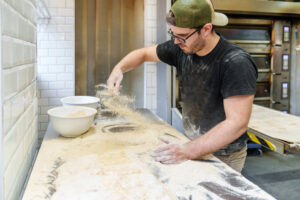
Working in a commercial bakery means spending long shifts surrounded by clouds of flour dust, especially during mixing, sifting, and packaging. While flour might seem harmless compared to industrial chemicals, repeated inhalation of fine flour particles can trigger a serious respiratory condition known as baker’s asthma. This occupational illness develops gradually, often after months or years of daily exposure, and can leave workers struggling to breathe both on and off the job. If you’ve developed asthma or other respiratory problems from years of working around flour dust, you may be entitled to workers’ compensation benefits.
How Flour Dust Leads to Occupational Asthma
Flour dust contains proteins from wheat, as well as enzymes, mold spores, and insect fragments that can act as respiratory irritants and allergens. With repeated exposure, some workers develop a sensitivity that triggers inflammation and narrowing of the airways every time they’re back on the bakery floor. Common symptoms include:
- Wheezing or a whistling sound when breathing
- Chest tightness that worsens during shifts
- Persistent coughing, especially at night
- Shortness of breath during mixing, sifting, or packaging tasks
- Symptoms that improve on days off and return once back at work
That last pattern, symptoms easing away from the bakery and flaring up again on shift, is often one of the clearest indicators that flour dust is the underlying cause.
Why These Claims Require Strong Medical Evidence
Because asthma can have many causes, insurers often try to attribute a worker’s breathing problems to allergies, smoking, or a pre-existing condition unrelated to the job. Building a strong claim typically requires:
- Pulmonary function testing showing reduced lung capacity
- Documentation from an occupational medicine physician linking symptoms to workplace exposure
- A record of symptom patterns tied to time spent on the job versus time away
- Evidence of ventilation conditions and dust levels in the work area
The more clearly a claim can demonstrate the connection between the bakery environment and the onset of symptoms, the harder it becomes for an insurer to deny it.
Benefits Available Through a Successful Claim
Workers’ compensation for occupational asthma can help cover a range of needs, including:
- Doctor visits, pulmonary testing, and specialist referrals
- Prescription inhalers and other asthma medications
- Temporary disability benefits if reduced lung function prevents a return to bakery work
- Permanent disability benefits for lasting respiratory impairment
- Vocational retraining if returning to a dust-heavy environment isn’t medically advisable
Protecting Your Claim from the Start
If you’re experiencing breathing problems that seem connected to your bakery job, a few steps can make a meaningful difference in your claim:
- Report your symptoms to your employer as soon as they appear
- Seek medical evaluation promptly, and mention your occupation and daily dust exposure
- Track when symptoms occur, particularly the difference between workdays and days off
- Keep records of any respiratory protection provided, or the lack of it
Get the Support You Need
Occupational asthma can permanently affect your ability to work in the job you’ve trained for and relied on, and navigating a workers’ compensation claim while managing ongoing symptoms shouldn’t fall entirely on your shoulders. An experienced advocate can help build the medical case linking your condition to your work environment and fight for the full benefits you deserve. If flour dust exposure at a Commerce bakery has affected your breathing, contact PLBH at (800) 435-7542 to talk through your options.