
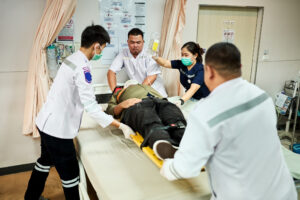
Healthcare workers routinely perform physically demanding tasks that place significant strain on their bodies. One of the most common—and most dangerous—duties is transferring patients. Whether moving a patient from a bed to a wheelchair, repositioning them during care, or assisting after a fall, these actions frequently lead to serious injuries. When a healthcare employee is hurt while transferring a patient, workers’ compensation benefits may be available, but these claims are often closely scrutinized.
Understanding how these injuries occur and what evidence supports a claim can help injured healthcare workers protect their rights.
Why Patient Transfers Are a Leading Cause of Injury
Patient transfers involve lifting, twisting, and stabilizing weight that can be unpredictable. Patients may lose balance, resist movement, or suddenly shift their weight, increasing the risk of injury. Even when proper technique is used, the physical demands can exceed safe limits—especially during understaffed shifts or emergencies.
Common injuries include back strains, herniated discs, shoulder tears, knee injuries, and repetitive stress damage. Over time, repeated transfers can also aggravate existing conditions, leading to chronic pain and reduced mobility.
When a Patient Transfer Injury Qualifies for Workers’ Compensation
Workers’ compensation generally covers injuries that occur while an employee is performing job-related duties. For healthcare workers, this includes injuries sustained while transferring or repositioning patients as part of routine care.
It does not matter whether lifting equipment was available or whether the employee followed every safety protocol perfectly. Workers’ comp is a no-fault system. The key question is whether the injury occurred in the course and scope of employment—not whether the worker made a mistake.
Why These Claims Are Frequently Disputed
Despite the prevalence of transfer-related injuries, insurers often attempt to deny or limit these claims. Employers may argue that the injury resulted from improper lifting technique, failure to use assistive devices, or a pre-existing condition.
Some insurers claim the injury was cumulative rather than work-related or assert that pain developed gradually and cannot be tied to a specific incident. These arguments are common, but they do not automatically defeat a valid claim.
Evidence That Helps Prove a Patient Transfer Injury
Medical documentation is essential. Treatment records should clearly describe how the injury occurred during a patient transfer and identify the affected body parts. Providers should document work restrictions and functional limitations.
Additional helpful evidence may include:
- Incident reports filed with the facility
- Witness statements from coworkers
- Staffing schedules showing workload conditions
- Records of unavailable or malfunctioning lift equipment
- Prior reports of similar injuries or safety concerns
Prompt reporting is critical. Delays can give insurers an excuse to question whether the injury was truly work-related.
The Role of Repetitive Trauma in Healthcare Injuries
Not all transfer injuries happen in a single moment. Many healthcare workers develop cumulative trauma from repeated lifting and repositioning over time. These injuries may still be compensable, but they require careful documentation linking job duties to the condition.
Detailed job descriptions and medical opinions explaining how repetitive transfers caused or aggravated the injury can make a significant difference.
How Legal Support Can Help Injured Healthcare Workers
Workers’ compensation claims involving healthcare facilities often involve aggressive defenses and complex medical issues. PLBH helps injured healthcare employees build strong claims, respond to denials, and pursue the full benefits available under the law.
If you were injured while transferring a patient as part of your healthcare job, you may have options—even if your claim has been challenged. Call (800) 435-7542 to speak with PLBH about protecting your rights and pursuing workers’ compensation benefits.